




From Absolutism to the Industrial Revolution: Europe up to 1900
Imagine Europe in the span of two centuries—between 1700 and 1900—a continent undergoing profound upheavals, reshaping its political, social, and economic landscape. It was an era marked by the decline of absolute monarchies, revolutionary upheavals, and the dawn of industrialization.
European Colonial Empires until the 18th Century
As the 17th century drew to a close, the once-dominant Spanish empire began to wane. New colonial powers emerged: Portugal, the Netherlands, England, and France. By the mid-1600s, these nations formed a colonial pentarchy—each vying for dominance overseas. During this period, treaties and international law expanded into the Atlantic world, enforcing political ties across oceans.
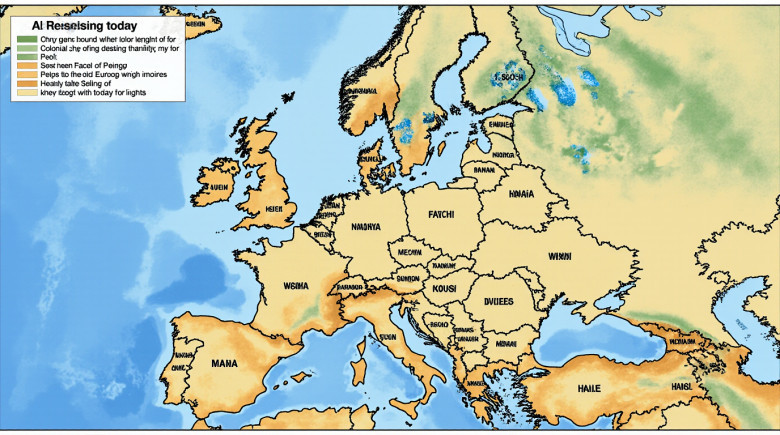
This growing interconnectedness meant that conflicts in Europe increasingly spilled over into colonies. Wars that began as European struggles soon became global conflicts. For instance, during the War of the Palatinate Succession (1688–1697), known in North America as "King William’s War," British forces fought French colonial troops. Similarly, in the early 1700s, the War of Spanish Succession (1701–1714) saw battles across continents—Europe, North America, and India—foreshadowing what could be called the first true "world war."
England and France, often allied with indigenous allies, fought fiercely to claim supremacy. British victories in North America and India marked the decline of France’s colonial influence. The Treaty of Paris (1763) solidified Britain’s dominance, signaling a shift toward a global rivalry. To support these ambitions, Britain expanded its navy and stationed large armies in colonies, but this also provoked resistance from settlers who began to challenge imperial authority through militancy.
Europe During the Age of Absolutism
In 1661, Louis XIV of France, known as the Sun King, took control after Cardinal Mazarini’s death. His court became the epitome of grandeur, and his centralization of power made France a model of absolutism. His goal was clear: to establish French hegemony. His aggressive policies led to territorial expansion but also sparked resistance across Europe.
Meanwhile, on the seas, England and the Netherlands emerged as maritime powers. Cromwell’s Navigation Acts of 1651 aimed to control trade, especially to exclude the Dutch, leading to a series of Anglo-Dutch wars—most notably, the war from 1665 to 1674. These conflicts eventually resulted in a British dominance of maritime trade.
The late 17th and early 18th centuries saw Europe oscillate between war and peace, with the concept of the "balance of power" gaining prominence. The idea was to prevent any single nation from becoming too powerful, fostering a tense but manageable equilibrium among the major states.
Europe and Napoleon Bonaparte
The French Revolution, beginning in 1789, challenged the old order. Its ideals of liberty and equality threatened monarchies and aristocratic privileges across Europe. France’s revolutionary zeal and subsequent wars under Napoleon (1799–1815) reconfigured the continent’s political map.
Napoleon, a military genius, restructured Europe through conquest and reforms. He abolished the Holy Roman Empire, replaced it with the Confederation of the Rhine, and crowned himself Emperor in 1804. His campaigns extended into Russia, where his army nearly perished in 1812, exposing France’s vulnerabilities.
The resilience of European powers led to a coalition that defeated Napoleon at Leipzig (1813) and Waterloo (1815). Napoleon’s fall marked the end of revolutionary upheaval and the beginning of a new era of diplomacy.
Europe After the Congress of Vienna
The Congress of Vienna (1814–1815) aimed to restore stability. Major powers—Britain, Austria, Russia, Prussia, and France—redrew the map, restoring monarchies and establishing new borders. They created the German Confederation, a loose association of 39 states, replacing the defunct Holy Roman Empire. This arrangement aimed to balance power but also suppressed revolutionary and nationalist movements.
However, the period of Restoration was not a simple return to the old regime. Many reforms persisted, such as constitutional monarchies and civil rights, especially in Western Europe. Yet, conservative forces, led by Austria’s Prince Metternich, sought to suppress liberal and nationalist aspirations, leading to tensions that would eventually erupt in revolutions of 1848.
The Revolutions of 1848
In 1848, waves of revolutionary protests swept across Europe, driven by demands for national unification, liberal reforms, and social justice. In Germany, the Frankfurt Parliament was formed, aiming to create a unified nation. But internal divisions and resistance from monarchs thwarted these efforts.
The revolutionaries’ hopes for a united and liberal Germany were dashed by the conservative backlash, and by 1849, the old regimes had reasserted control. Nevertheless, these upheavals planted seeds for future national movements—especially in Germany and Italy—whose unification was still decades away.
The German Confederation and the Path to Unification
Despite setbacks, nationalist ideas persisted. The Zollverein, a customs union established in 1834, fostered economic integration among German states, setting the stage for political unification. Key figures like Otto von Bismarck emerged in Prussia, advocating for a "small Germany" under Prussian leadership, excluding Austria.
By the 1860s, Bismarck orchestrated wars against Denmark and Austria, culminating in the decisive victory at Königgrätz (1866). These victories facilitated the creation of the North German Confederation and, ultimately, the proclamation of the German Empire in 1871, with Wilhelm I crowned as Kaiser.
Austria-Hungary and the Nationalities Problem
Throughout the 19th century, Austria faced deep internal divisions. Its multiethnic empire struggled with rising nationalist movements among Czechs, Hungarians, Italians, Rumanians, and others. The 1867 Ausgleich (Compromise) granted Hungary a separate parliament, forming Austria-Hungary. Yet, many nationalities remained dissatisfied, leading to ongoing tensions that threatened the empire’s stability.
The Italian Unification
Italy’s path to unity was complex. After the Napoleonic Wars, the Italian peninsula was fragmented among various states. The Risorgimento movement, gaining momentum after 1848, aimed to unify Italy under a single crown. Key figures like Garibaldi and Cavour collaborated to free southern Italy and consolidate northern regions with Piedmont. By 1861, Italy was proclaimed a unified kingdom, with Rome becoming its capital in 1870.
The Industrial Revolution
Simultaneously, Europe experienced a profound economic transformation. Beginning around 1789, the industrial revolution changed production, transportation, and society itself.
Britain led the way early, with innovations like mechanized textiles and the steam engine. The development of railways revolutionized transport, connecting markets and fostering economic growth. The 19th century saw Europe and North America becoming industrial powerhouses, while Japan followed later in Asia.
The revolution was driven by abundant resources, a growing population, and technological innovations. It also brought social upheaval—urbanization, the rise of the bourgeoisie, and the emergence of the working class. While workers faced poor conditions initially, reforms and social legislation gradually improved their lives.
Europe by 1914
By the dawn of the 20th century, Europe was a continent of competing empires, nationalist tensions, and technological marvels. The old monarchies still held sway, but the forces of change—industrial, social, and political—set the stage for the upheavals of the coming century.














Comments
0 comment