




From Wolves to Companions: How Dogs Shaped Human History
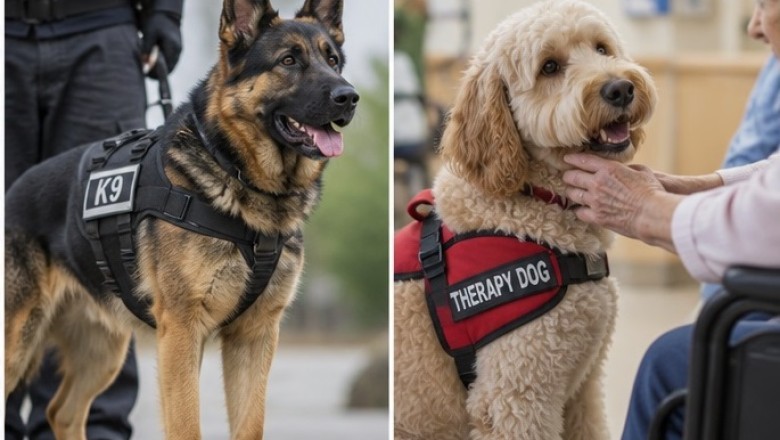
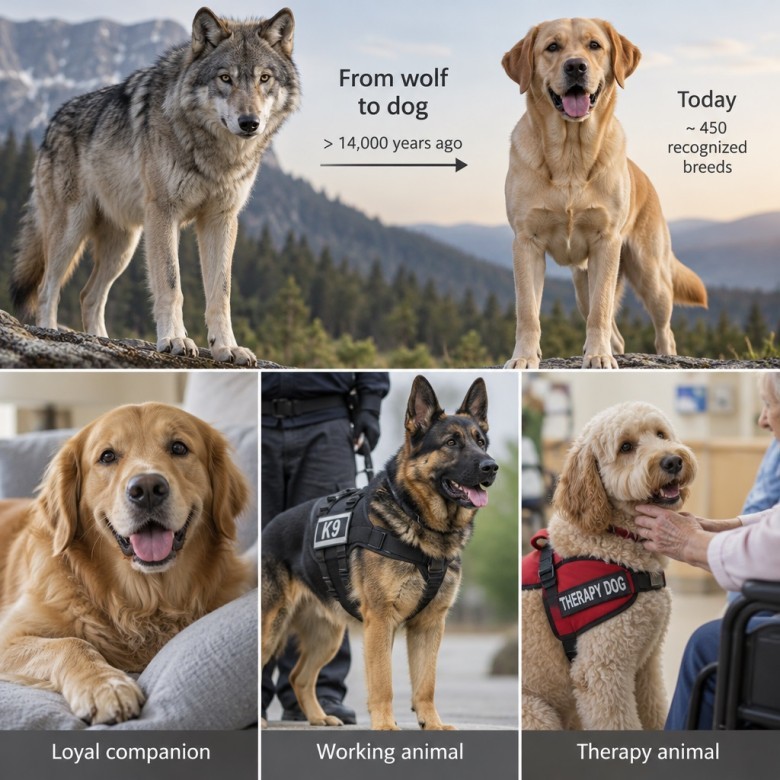
More than 14,000 years ago, the boundary between wild predators and early human settlements began to blur. Descended from the gray wolf, the domestic dog (Canis lupus familiaris) became the first animal species to share daily life with people—not merely as a tool, but as a partner. Today, across roughly 450 recognized breeds, dogs fill roles that range from family confidants to search-and-rescue specialists and hospital therapy animals.
How a Wild Predator Became a Partner
Domestication rarely starts with a single master plan; it often starts with mutual benefit. Early human camps offered food scraps and protection from rival predators, while wolves with lower fear responses and greater tolerance toward people gained a steady meal without constant conflict. Over generations, natural selection and human breeding favored traits such as attentiveness, trainability, and social bonding.
Modern canine cognition reflects that long shared past. Unlike captive wolves raised by humans, domestic dogs readily follow human pointing gestures, track human gaze direction, and read subtle shifts in posture and tone. Mutual eye contact between dogs and their caregivers even triggers oxytocin release—the same hormone associated with bonding and trust in humans.
Three Roles, Countless Connections
While every dog is an individual with its own quirks, three broad roles highlight how adaptable the species has become:
-
Loyal companions: In everyday homes, dogs anchor routines, encourage outdoor movement, and offer steady emotional presence. For people living alone or adjusting to major life changes, a dog's quiet greeting at the door often turns an ordinary evening into a shared moment.
-
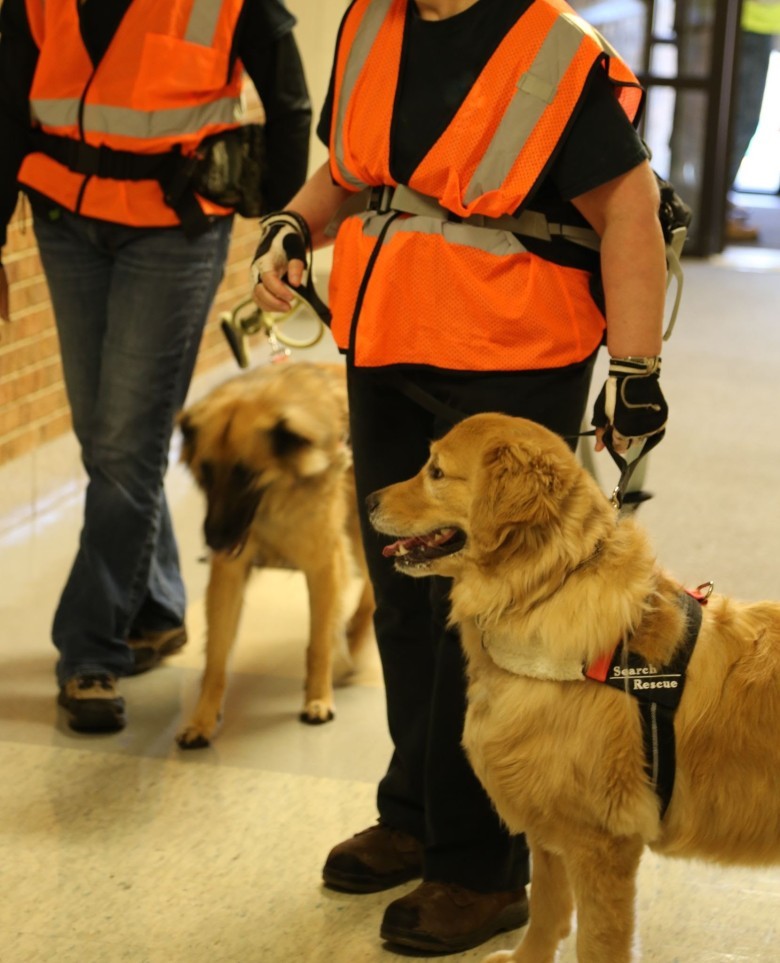
Working animals: Herding livestock across steep pastures, guiding people who are blind or low-vision, sniffing out hazards, and locating missing persons rely on specialized instincts paired with patient training. On a mountain trail or in disaster rubble, a working dog uses a sense of smell far more acute than human vision to find clues people would miss.
-
Therapy animals: In hospitals, schools, and care centers, therapy dogs help calm anxious patients and open doors to conversation. A hesitant child reading aloud to a calm dog often feels less self-conscious than reading to a room full of adults.
| Role | Primary Strengths | Everyday Impact |
| Companion | Social attunement, routine, affection | Reduces loneliness, encourages daily walks and play |
| Working Animal | Scent detection, stamina, task focus | Assists with navigation, safety, detection, and rescue |
| Therapy Animal | Calm temperament, gentle interaction | Eases stress, supports emotional comfort and engagement |
Real-World Stories from Field and Home
Stories from working teams show how precision and trust come together under pressure. Search-and-rescue handlers train for months in woods, collapsed structures, and snow so their dogs stay focused amid noise and confusion. When a dog catches a human scent on a wind shift and signals a find, years of conditioning pay off in minutes that can change a family's life.
Therapy visits often work on a quieter scale. Picture an older adult recovering after surgery who has barely spoken all morning, then brightens when a gentle dog rests its chin beside the bed. That small shift in mood does not replace medical care, yet it makes recovery feel a little less isolating.
At home, the most memorable stories are usually small ones: a dog that knows the exact sound of a teenager's footsteps on the porch, or an older hound that slows its pace to match a senior companion. Across roughly 450 breeds—from tiny lap dogs to sturdy mountain breeds—the core partnership stays remarkably consistent: clear communication, trust earned over time, and mutual care.
How Breeds Were Developed for Specific Jobs
Most modern dog breeds are relatively young—many emerged over the last few centuries as people refined existing working types for specialized tasks. Before modern breed registries, selection was practical rather than cosmetic: breeders kept and mated dogs that performed reliably in the field, on the farm, or in the home.
-
Herding and guarding: Pastoral communities shaped dogs that could gather, turn, or protect livestock. Herding dogs often retain modified predatory behaviors—such as stalking, eye-staring, and nipping—without finishing the attack, while livestock guardians developed calm independence and a willingness to stay with flocks.
-
Hunting, pointing, and retrieving: Different terrain and game demanded distinct physical and behavioral tools. Sighthounds rely on speed and visual pursuit in open country; scent hounds track ground scents over long distances; pointers freeze to signal quarry; retrievers carry game gently back to the hunter.
-
Draft, sled, and utility work: Heavy-boned breeds were selected for strength, endurance, or cold tolerance to pull carts or sleds, whereas smaller terriers and ratters were bred for agility, grit, and determination in tight spaces.
-
Companionship: Some lines were shaped primarily for close human contact, approachability, and life indoors rather than demanding outdoor labor.
| Functional Group | Primary Historical Job | Key Behavioral & Physical Traits |
| Herding | Moving and controlling livestock | High focus, responsiveness to cues, stamina |
| Working / Guard | Protecting property/flocks, hauling loads | Strength, territorial awareness or steady temperament |
| Hound & Sporting | Locating, flushing, or retrieving game | Strong scent drive, endurance, or soft mouth |
| Terrier | Controlling small vermin, digging | High energy, persistence, boldness |
| Companion | Close household partnership | Sociability, adaptability to indoor routines |
How Genetics Shapes Working and Companion Traits
Genetics sets a dog's baseline inclinations, though environment, socialization, and training shape how those traits show up day to day.
-
Polygenic behavior vs. single genes: Complex traits like trainability, boldness, sociability, and anxiety rarely come from a single "job gene." Instead, they emerge from many genes working together alongside early life experience.
-
Morphology and size genes: Physical traits that support certain jobs—such as body mass, leg length, skull shape, and coat type—are strongly influenced by specific genetic variants, including alleles linked to growth pathways like IGF1. A heavy sled dog and a nimble terrier carry very different physical blueprints.
-
Instincts are tendencies, not guarantees: A border collie may naturally fixate on moving objects, and a golden retriever may eagerly carry items in its mouth, yet individual variation within every breed is wide. Even working-line dogs can become affectionate pets, and companion dogs can learn complex tasks.
In short, selective breeding amplified useful tendencies from the wolf gene pool, while individual development determines how well a dog fits a particular household or working role.
How do socialization, environment, and training interact with genetics to shape a dog's behavior?
Genetics sets a dog's starting range, while socialization, environment, and training determine where that dog lands within that range. Rather than acting in isolation, these factors continuously shape one another across a dog's lifespan.
1. Genetics: The Baseline Range
Genetics shapes underlying tendencies—such as sensitivity to sound, energy level, prey or herding drive, and boldness—as well as physical traits like size, stamina, and sensory strengths. However, most behavioral traits are polygenic (influenced by many genes rather than a single switch) and show wide variation even within the same breed. A genetic predisposition makes certain behaviors easier to trigger or reinforce, not inevitable.
2. Socialization: Calibrating What Feels Safe or Novel
Early socialization—especially during the sensitive window roughly between 3 and 14 weeks of age—helps a puppy form associations with people, other animals, sounds, surfaces, and everyday situations.
-
Positive, gradual exposure teaches a puppy that unfamiliar sights and sounds are manageable rather than threatening.
-
Limited or stressful early exposure can leave a dog more reactive or fearful later in life, especially if that dog already carries genetic sensitivity or high vigilance.
3. Environment: Daily Stressors, Routines, and Reinforcement
A dog's ongoing environment either stabilizes or strains its behavior every day. Predictable routines, calm handling, adequate rest, mental enrichment, and safe exercise lower baseline stress and help a dog regulate arousal. Conversely, chaotic households, chronic noise, isolation, or inconsistent boundaries can trigger anxiety, reactivity, or frustration—even in breeds known for easygoing temperaments.
4. Training: Channeling Drive Into Clear Habits
Training translates raw instincts and emotional states into reliable habits.
-
Working with instincts: A high-drive herding or scent breed often struggles if asked to ignore strong impulses without an outlet, whereas channeling that drive into structured games, scent work, or clear cues builds focus and self-control.
-
Consistency and communication: Reward-based, clear, and consistent training teaches a dog what to do instead of relying solely on suppression, helping anxious or overexcited dogs make calmer choices under pressure.
How They Interact in Real Life
Consider two littermates from a working line with strong alert and energy traits:
-
Dog A is raised in a steady home, gradually introduced to city traffic and new visitors as a puppy, given daily exercise and mental puzzles, and trained with calm cues. Its high energy becomes focus and enthusiasm.
-
Dog B has the same genetic blueprint but spends early months isolated, experiences startling loud noises without recovery time, and gets inconsistent reactions to barking. The same underlying drive and sensitivity can surface as hypervigilance or reactivity.
Genetics provides the raw material, socialization opens or narrows early adaptability, environment shapes daily stress and comfort, and training builds practical skills on top of all three.













Comments
0 comment