



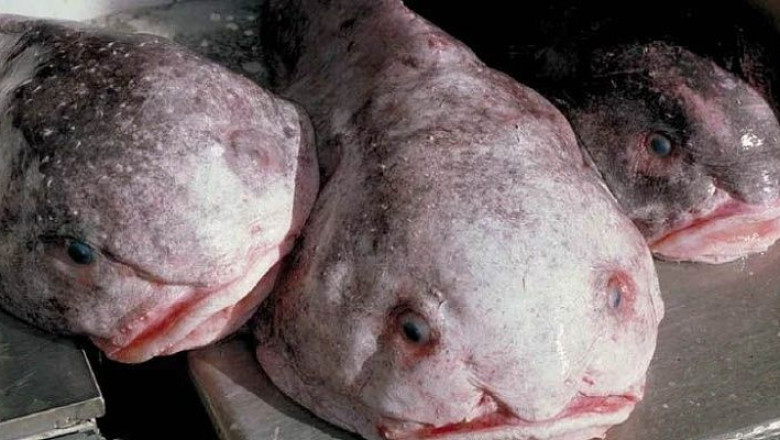

The Blobfish: A Tragic Beauty Misunderstood by the World
There’s a certain kind of sadness that clings to the blobfish. Not the sadness of its own existence—after all, it lives a perfectly content life in the crushing darkness of the deep sea—but the sadness we project onto it. That drooping nose, those tiny black eyes, that expression of bewildered despair—it’s as if nature herself decided to sculpt a creature that embodies every bad Monday morning, every lost sock, every forgotten birthday. And yet, the blobfish has no idea it’s a meme. It has no idea it’s been crowned the ugliest animal on Earth. It just floats, quietly, 1,200 meters below the surface, blissfully unaware of its own celebrity.
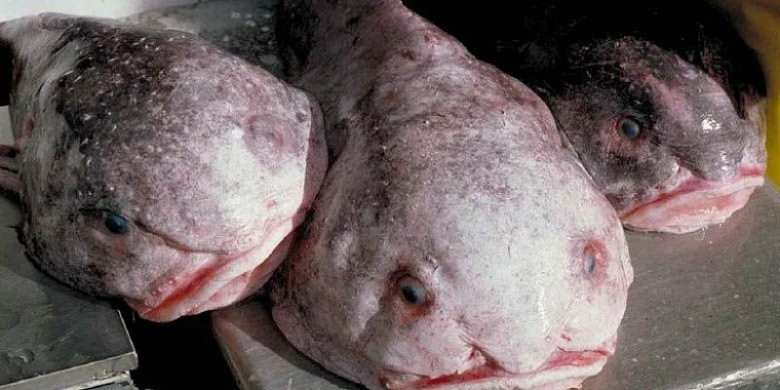
But how did a fish that looks like a melted candle become one of the internet’s most enduring symbols of absurdity? And more importantly, why have we been so wrong about it?
The Discovery That Changed Nothing—Until the Internet
Let’s go back to 1983. A team of marine biologists off the coast of New Zealand trawls the depths and pulls up something strange. It’s a fish, but not like any they’ve seen. Its body is gelatinous, its skin loose and translucent. They name it *Psychrolutes microporos*—from the Greek *psychroloutes*, meaning “one who bathes in cold water.” For years, it remained a quiet footnote in scientific journals. No one called it ugly. No one called it anything, really. It was just another deep-sea oddity, filed away in a museum jar.
Then came the internet. By the early 2000s, someone uploaded a photograph of a blobfish that had been brought to the surface. The fish looked like a grumpy, deflated balloon with a nose like a melted candle. The world laughed. It became a meme—shared, Photoshopped, turned into plush toys and emoji. The blobfish was officially the internet’s favorite punching bag. The Ugly Animal Preservation Society even adopted it as their mascot in 2013, because if you’re going to save ugly animals, you might as well start with the ugliest.
But here’s the thing no one bothered to ask: *Why does it look like that?*
The Pressure of Living Deep
The answer, of course, is physics. The blobfish lives at depths of 600 to 1,200 meters, where the pressure is over 100 times greater than at sea level. To survive, its body evolved without a swim bladder—the gas-filled sac that most fish use to control buoyancy. Instead, the blobfish’s body is mostly a gelatinous mass with a density slightly less than water. This allows it to float just above the seafloor without expending energy. It’s a perfect adaptation for a life of stillness.
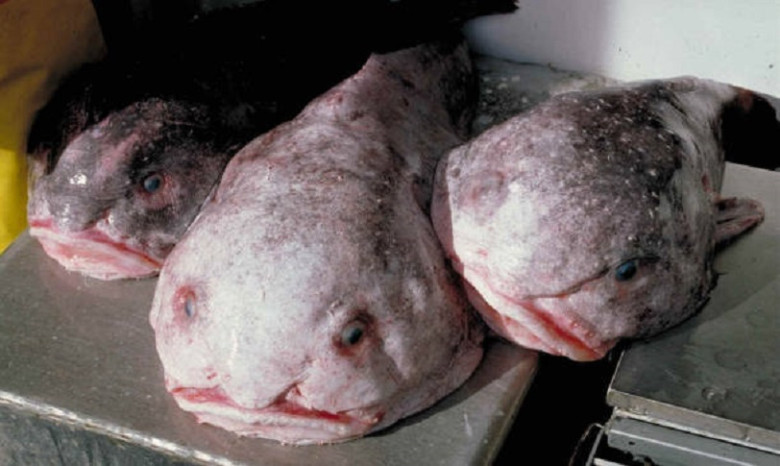
But when you drag a blobfish to the surface, something terrible happens. The sudden drop in pressure causes its body to expand and collapse. Its soft tissues, once held together by the immense weight of the ocean, sag and stretch. Its nose droops. Its skin becomes a loose, mucus-covered sack. The blobfish you see in photos is not a blobfish—it’s a blobfish in distress, a creature literally falling apart because we pulled it out of its world.
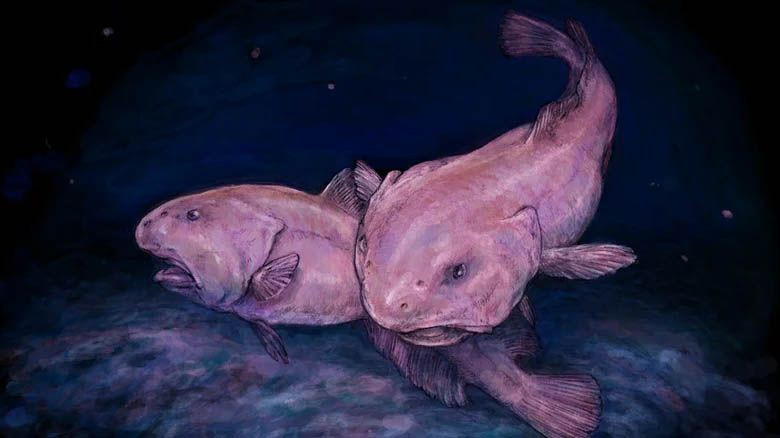
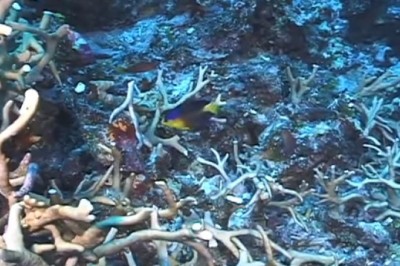
In its natural habitat, the blobfish looks… normal. Underwater footage shows a fish with a streamlined body, dark eyes, and a perfectly proportioned face. It doesn’t look sad. It doesn’t look ugly. It looks like a fish that knows exactly where it belongs.
A Life Unseen
Imagine living your entire existence in a world of total darkness, where the pressure would crush a human instantly. You drift slowly above the seabed, feeding on small crustaceans and organic debris that rain down from above. You have no predators—nothing can survive at those depths to hunt you. You are, in a sense, the king of a silent, cold kingdom. Your body is soft and pliable, but it’s also strong—strong enough to withstand forces that would turn steel into foil.
Now imagine being ripped from that kingdom, hauled up through layers of light and warmth you’ve never known, and then photographed while your body disintegrates. That’s the fate of every blobfish that becomes an internet sensation. The very thing that makes it famous—its grotesque appearance—is a sign of its suffering.
The Human Connection
Why do we find the blobfish so compelling? I think it’s because we see something of ourselves in it. That look of weary resignation, of having seen too much and cared too little—it mirrors our own moments of existential exhaustion. The blobfish is the face we make when the alarm goes off at 6 a.m., when the email inbox is overflowing, when the world feels too heavy.
But there’s also a lesson here about empathy. We laugh at the blobfish because we don’t understand it. We see a deformed, sad creature and assume that’s its true nature. But the blobfish is not sad. It’s not ugly. It’s just a fish that was taken out of its environment and forced to perform for our amusement. The same thing happens to people, of course. We judge a person’s worth by their appearance, their accent, their background, without ever knowing the pressures they’ve endured. We call someone “ugly” because we’ve only seen them at their worst moment.
A Second Chance
In recent years, scientists have worked to correct the blobfish’s reputation. Deep-sea submersibles have captured footage of the fish in its natural habitat, showing a creature that is graceful and ordinary. The Ugly Animal Preservation Society, despite their tongue-in-cheek campaign, has raised awareness about the plight of deep-sea creatures threatened by bottom trawling. The blobfish has become a symbol not of ugliness, but of resilience—and of the danger of judging without context.
So the next time you see a blobfish meme, pause. Remember that the fish in that photo is not a joke. It’s a victim of decompression, a refugee from a world we can barely imagine. And then ask yourself: How many things have I judged unfairly because I only saw them out of place?
The blobfish doesn’t need our pity. It needs our understanding. And maybe, just maybe, it needs us to stop laughing and start listening—to the quiet, deep-sea truth that beauty is not what we see, but what we take the time to learn.















Comments
0 comment