



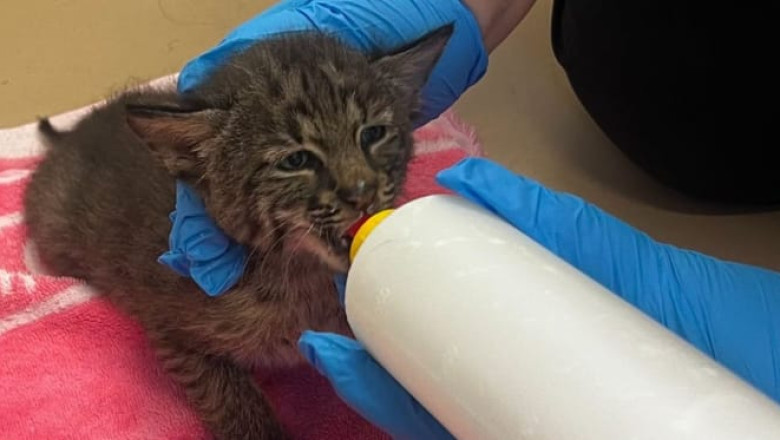

Not a Cat: Florida Firefighters Rescue 'Kitten' from Brush Fire, Discover It's a Baby Lynx
BAYSHORE, FLORIDA – Last May, volunteer firefighters in Bayshore responded to a brush fire burning through dry vegetation on the outskirts of town. What they expected was a routine fire call. What they found was a tiny, soot-covered survivor fighting for its life.
As the crew worked to contain the flames, one firefighter spotted a small figure stumbling through the smoke. Covered in black soot and visibly exhausted, the animal was struggling to escape the advancing fire. Without hesitation, a rescuer grabbed a blanket, approached carefully, and scooped up the tiny creature. Too weak to resist, it simply collapsed into the fabric.
Back at the fire station, the crew began emergency care. They offered water, which the animal drank eagerly. They gently cleaned the thick layer of soot from its fur, revealing a soft coat beneath. They spoke softly, offering comfort to soothe its trauma. For hours, the exhausted little creature slept, wrapped in warmth and safety.
Then came the bath.
As the last of the soot washed away, the firefighters gathered around to examine their patient more closely. Something wasn't right. The ears were small and unusually shaped — tufted at the tips. The paws seemed disproportionately large for a kitten. The fur patterns were faint but unlike any domestic cat breed they knew.
"We started looking at each other," one firefighter recalled. "We said, 'That's not a house cat.'"
To confirm their suspicion, the crew contacted a local wildlife rehabilitation center. They sent photos and described the animal's features. The experts' verdict came back swiftly: the little survivor of the flames was not a kitten at all, but a baby bobcat — a young lynx native to Florida's wildlands.
The revelation stunned the firefighters, but it did not change their hearts.
"A rescue is a rescue," said one crew member. "Whether it's a kitten or a lynx, we weren't going to leave it behind."
The bobcat kitten was transferred to a specialized wildlife sanctuary where it now receives species-appropriate care. Experts say the animal is recovering well from smoke inhalation and dehydration. Once fully rehabilitated, it will be released back into a safe, suitable wild habitat — far from any brush fires.
For the volunteer firefighters of Bayshore, the call was one they will never forget. They went to fight a fire and ended up saving a wild soul. And for a few hours, they thought they had adopted the most unusual kitten in Florida.















Comments
0 comment